Full Spec Motors

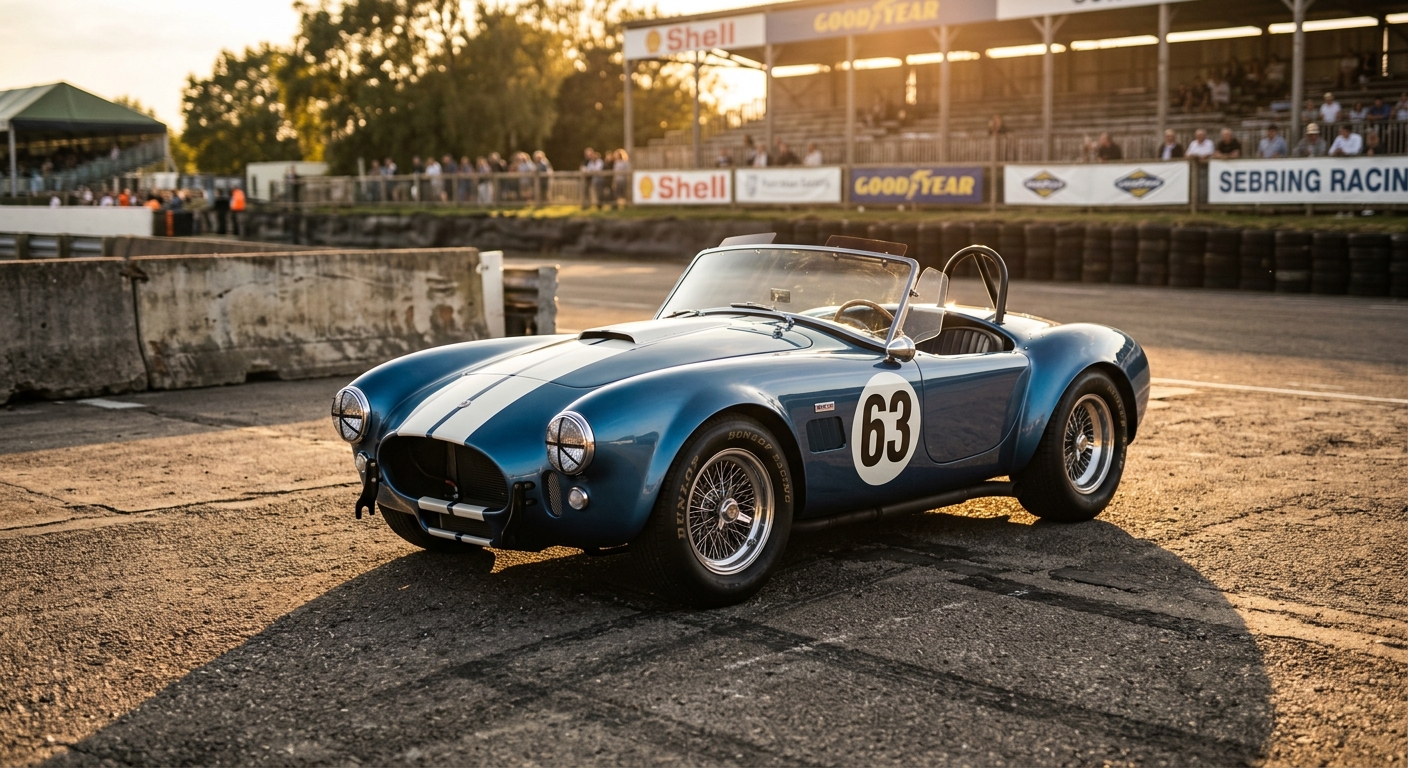
The Anglo-American Beast That Started It All, 1963 Shelby Cobra 289

3 min read

In 1962, a chicken farmer turned racing legend named Carroll Shelby had an idea so audacious it bordered on the insane: stuff the most powerful American V8 he could find into a lightweight British sports car chassis. The result was the Shelby Cobra, a machine that would redefine what a sports car could be and establish the template for American performance that endures today.

The original 1963 Cobra 289 represented the perfect fusion of Old World craftsmanship and New World muscle, creating something entirely new in the process.

The Birth of a Legend

The Cobra’s origin story reads like automotive folklore. Shelby, freshly retired from racing due to a heart condition, convinced AC Cars to ship him rolling chassis from their struggling Ace roadster program. Meanwhile, he sweet-talked Ford into providing their new small-block 289 cubic-inch V8 engines. The marriage took place in a small shop in Venice, California, where Shelby’s crew performed automotive alchemy.

The transformation was dramatic. Where the AC Ace produced a genteel 102 horsepower from its aging inline-six, the Cobra 289 unleashed 271 horsepower through those same spindly wire wheels. The power-to-weight ratio was unlike anything available to civilian buyers, turning every drive into an exercise in controlled violence.

Engineering Brilliance and Brutality

What made the early Cobra special wasn’t just raw power, but how that power was delivered. The Ford 289 V8 was a masterpiece of engineering, featuring thin-wall casting techniques that kept weight down while maintaining strength. Paired with the AC’s sophisticated independent front suspension and well-sorted chassis geometry, the Cobra offered handling that could embarrass far more expensive European exotics.

The steering was unassisted and immediate, transmitting every nuance of the road surface directly to the driver’s hands. The four-speed manual transmission featured a reverse lockout and close-ratio gearing that kept the engine in its sweet spot. There were no electronic aids, no power assistance, and certainly no forgiveness for ham-fisted driving.

Living With Lightning

Driving a 1963 Cobra 289 today is like handling a barely domesticated animal. The clutch is heavy, the steering requires real muscle at parking speeds, and the side exhausts ensure everyone within a three-block radius knows you’re coming. But once the engine warms up and you find an open road, the Cobra reveals its genius.

The acceleration is still shocking by modern standards. The 289’s torque curve is perfectly matched to the car’s weight, providing instant throttle response and a soundtrack that ranges from a burbling idle to a full-throated roar under acceleration. The suspension, while crude by contemporary standards, offers a directness of communication that modern cars can’t match.

Racing Pedigree

The Cobra wasn’t built just to look fast parked at country clubs. Shelby’s team campaigned these cars in SCCA racing, where they dominated the competition and established Shelby American as a serious racing operation. The lessons learned on tracks like Laguna Seca and Riverside directly influenced the road cars, ensuring that every Cobra delivered genuine racing DNA.

Classic & Vintage

1963 Shelby Cobra 289

Ford 289 V8 / Anglo-American Hybrid

Original Price: $5,995 (≈$58,000 today)

0-60 mph4.2s
Top Speed138mph
Power271hp
Production580units

Engine

TypeFord 289 V8
Displacement4.7L (289 ci)
Power271 hp @ 6,000 rpm
Torque312 lb-ft @ 3,400 rpm

Transmission

Type4-speed manual
RatiosClose-ratio
Final Drive3.54:1

Dimensions

Length151.5 in
Width61.0 in
Wheelbase90.0 in
Weight2,020 lbs

Heritage

Introduced1962
DesignerCarroll Shelby
289 Production580 units
Market Value$1.2M+

Full Spec Motors Ratings

Performance

9/10

Handling

8/10

Daily Usability

3/10

Value

7/10

Sound

10/10

Character

10/10

The 1963 Shelby Cobra 289 remains the purest expression of Carroll Shelby’s vision: brutal performance wrapped in beautiful bodywork with no apologies for comfort or convenience. It’s a machine that demands respect and rewards skill, representing an era when sports cars were built to go fast first and ask questions later. In today’s sanitized automotive landscape, the original Cobra stands as a monument to the time when horsepower was king and driving was an art form requiring genuine commitment.
6 thoughts on “The Anglo-American Beast That Started It All, 1963 Shelby Cobra 289”

  1. ngl the cobra is legit one of the few times a brit chassis actually made sense, those ac bodies were light enough that a proper 289 didnt turn it into a oversteering death trap like so many imports. shelby knew what he was doing combining american muscle with something that could actualy handle – wish more of todays cars had that balance instead of just being all show you know?

    Log in or register to reply
    • okay but can we talk about how those hand-formed aluminum bodies would’ve shown every single swirl mark and imperfection under sunlight, like i genuinely cannot imagine detailing one of those early shells without having a minor breakdown. that said, you’re absolutely right about the balance thing, and modern ppf technology actually lets us preserve that lightweight aesthetic without the constant maintenance nightmare that those original owners dealt with – wish more manufacturers would embrace that philosophy instead of just slapping weight and tech onto everything.

      Log in or register to reply
  2. honestly the bodywork on those early cobras must have been a nightmare to keep pristine, all that hand-formed aluminum would show every imperfection if you weren’t careful with maintenance. i’d love to see what detailing techniques they used back then vs now, because keeping that raw aluminum or paint looking flawless at those speeds had to be brutal on the finish.

    Log in or register to reply
    • Same thing we deal with in karting actually, haha – lightweight materials are amazing for performance but they’re so unforgiving with setup and maintenance. I imagine those hand-formed aluminum bodies were super sensitive to even tiny impacts or weather changes, kinda like how a kart’s chassis flex can totally change your handling if something’s bent slightly. Bet the drivers back then had to be way more meticulous about pre-race checks than we do now with modern materials.

      Log in or register to reply
  3. man that cobra is still something else isnt it, ive seen a couple of em on the road back in the day and the way they handled was just insane for the time. funny how you combine the right parts and suddenly you got something that changes everything, kind of like how a good tire and proper alignment can transform how a car feels under you’re hands lol.

    Log in or register to reply
    • totally agree that the combo of lightweight construction and that V8 power was revolutionary, though I’ll add that those early Cobras had to deal with pretty lenient emissions standards back in ’63 which definitely helped the performance equation. nowadays if you wanted to recreate that formula you’d be fighting EPA regs and smog checks, especially in California or the northeast, so the engineering challenge is way different. the tire and alignment point is spot on though, that foundation stuff matters just as much as raw power when you’re trying to nail both performance and keeping emissions in spec.

      Log in or register to reply

Leave a Comment