In the rarified world of boutique supercars, few names carry the mystique of Ascari. Born from the passion of Dutch millionaire Klaas Zwart and named after legendary racing driver Alberto Ascari, this Spanish marque created machines that prioritized pure driving experience over comfort or compromise. The A10 represents the culmination of that philosophy, a track-bred weapon that makes no apologies for its singular focus on performance.
Born From Racing DNA
The A10’s genesis lies in Ascari’s obsession with motorsport authenticity. Unlike many supercars that merely borrow racing aesthetics, the A10 was developed alongside Ascari’s own racing circuit, the Resort Ascari in Spain. This unique approach meant every design decision was validated on track, resulting in a machine that feels more like a tamed race car than a road-going exotic.
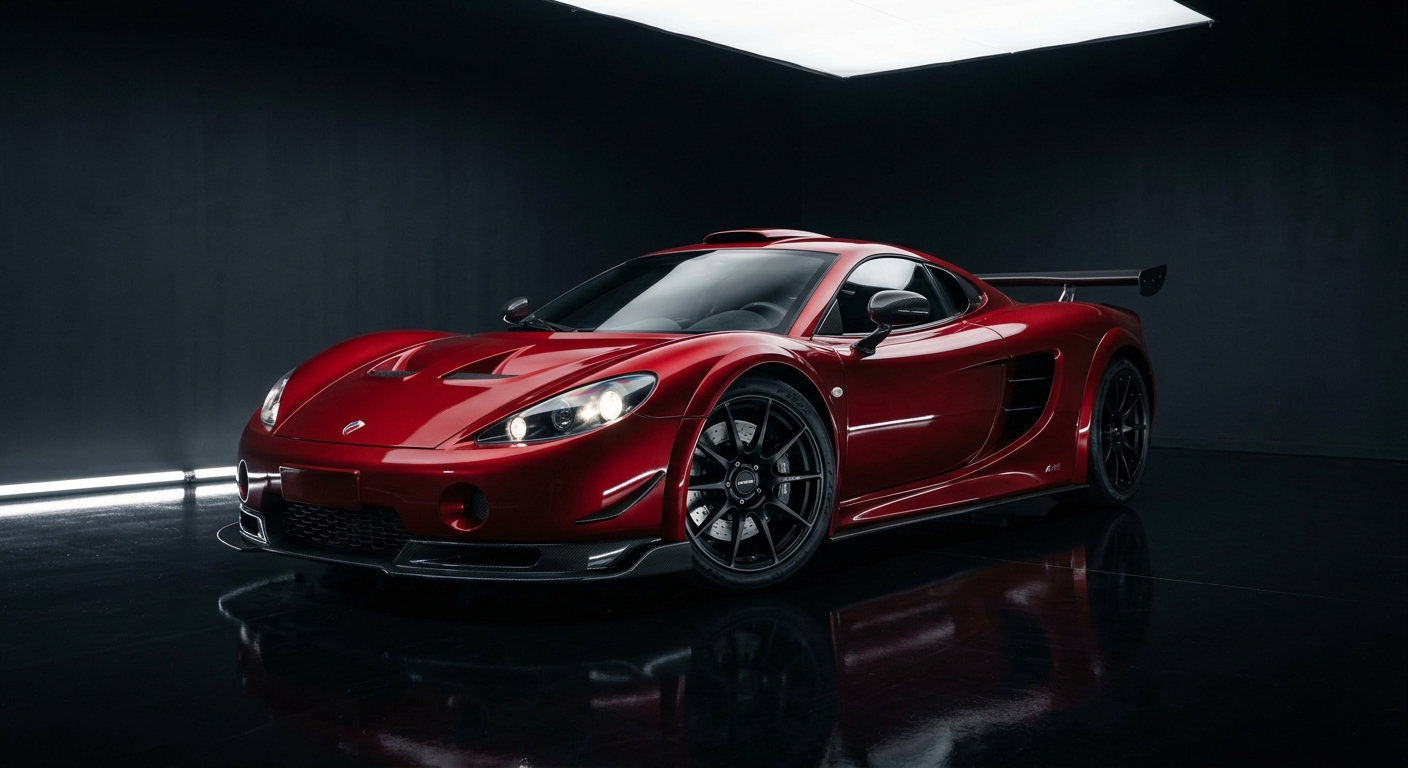
The bodywork, crafted entirely from carbon fiber, showcases functional aerodynamics at every turn. The aggressive front splitter, side vents, and prominent rear wing aren’t just for show, they’re the result of extensive wind tunnel testing and real-world validation. The A10’s silhouette is purposeful rather than pretty, with every curve serving the pursuit of downforce and cooling efficiency.
BMW Power, Ascari Soul
At the heart of the A10 lies a naturally aspirated 5.0-liter BMW V8, heavily modified by Ascari’s engineers to produce 625 horsepower. This isn’t simply a transplanted engine, it’s been comprehensively reworked with new internals, a bespoke ECU, and a exhaust system that produces one of the most spine-tingling soundtracks in the supercar world.
The engine’s character perfectly matches the A10’s no-compromise ethos. Peak power arrives at a screaming 7,000 rpm, demanding that drivers work for their performance. There’s no turbo lag to manage, no hybrid complexity to understand, just pure, linear power delivery that builds with intoxicating intensity as the tachometer needle sweeps toward the redline.
Precision Engineering
The A10’s chassis represents the pinnacle of early 2000s supercar engineering. The carbon fiber monocoque provides exceptional rigidity while keeping weight to a minimum, with the entire car tipping the scales at just 1,280 kilograms. This power-to-weight ratio translates into devastating acceleration, with 60 mph arriving in just 2.8 seconds.
The suspension system, derived directly from Ascari’s racing experience, uses double wishbones all around with adjustable dampers. On track, the A10 exhibits the kind of precision and balance that separates true driver’s cars from mere fast machines. The steering is hydraulically assisted but maintains exceptional feel, communicating every nuance of the road surface to the driver’s hands.
Interior Philosophy
Step inside the A10 and you’re immediately transported into a cockpit designed around the driving experience. The dashboard is sparse, functional, and covered in Alcantara. The seats, while supportive, are more concerned with holding you in place during high-g cornering than long-distance comfort. This is a cabin that speaks to serious drivers who understand that luxury and performance don’t always align.
The manual transmission, a six-speed unit sourced from Gearbox Developments, requires real skill to master. In an era when paddle-shift systems were becoming dominant, Ascari’s commitment to the traditional three-pedal layout was both admirable and commercially risky. For driving purists, however, it was exactly what the A10 needed to complete its character.
Legacy and Rarity
With only 50 A10s ever produced, encountering one today is an event in itself. Each car was essentially hand-built, with customers able to specify unique details and configurations. This exclusivity, combined with Ascari’s subsequent focus on their Race Resort and driver training programs, has made the A10 one of the most collectible supercars of the 2000s.
The A10’s influence extends beyond its small production numbers. It proved that boutique manufacturers could create machines that rivaled established supercar makers when passion and expertise aligned. In many ways, it foreshadowed the current era of limited-production hypercars, each designed to offer a unique interpretation of ultimate performance.
The Ascari A10 remains a monument to uncompromising automotive vision, a machine that chose purity over popularity and track performance over mass appeal. In today’s world of increasingly sanitized supercars, the A10’s raw, demanding character feels more precious than ever. This is what happens when passionate engineers are given free rein to build their ultimate driving machine.